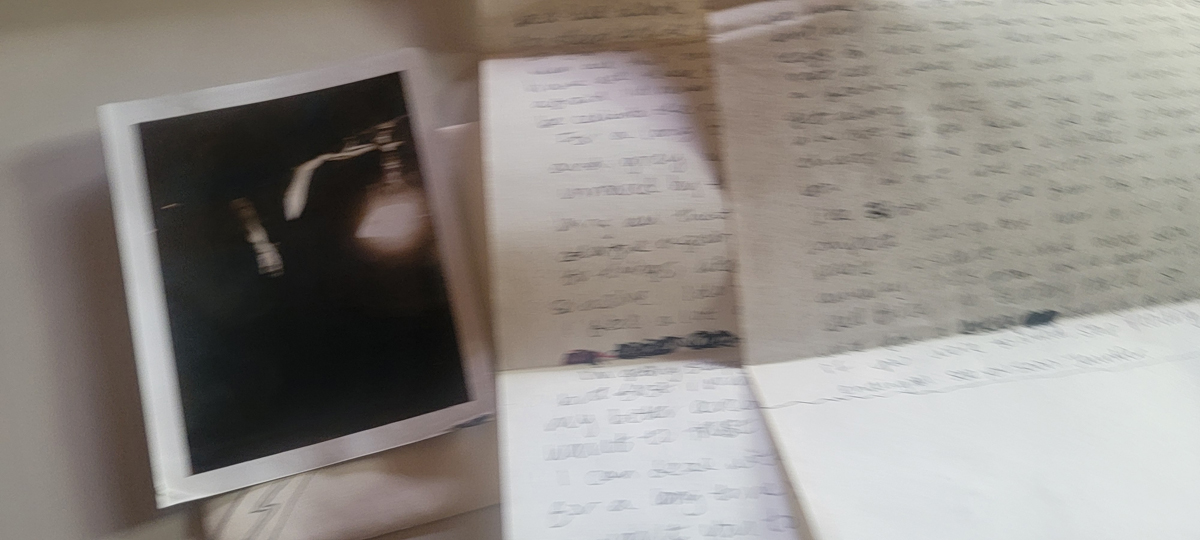

In a plastic bucket, I batched stray things that needed decisions. What unified them was their shared status. Not one of them was mine but it’s all in my possession and I have to touch everything now because I won’t take an attic full of deferred decisions to France. I don’t have the space to keep carrying this trash with me — my personal dump of ambivalent inheritances from people who have now been released from their earthly burdens. Yet I still hold them — their anxious steward — trussed by other people’s attachments long enough now that it feels personal. And yet these things are all new to me.
Pieces of a window air-conditioner I refuse to use because the sound of it is the soundtrack of your dying. A short piece of hose with brass fittings – maybe formerly part of your home dark room set up. A battered and heavily annotated and underlined copy of T.S. Eliot’s The Wasteland. An envelope of bad color snapshots of you when you were young, the kind of shitty pictures that fill shoe boxes and vinyl-covered albums in every house and storage unit in the country. They weren’t in focus. No notable events. Not great compositions, cheap cameras – just bad captures and since you are dead it feels like a desecration not to treasure them. Three 7-inch bootleg records worth alot of money now and a cd of The Hidden Hand marked Promotional Copy, Not for Sale. A card with a two-dollar bill in it and the love letters from J, written in a hotel room in Chicago, with a polaroid selfie taken in the near dark. There were two letters in an envelope that had been torn nearly in half when you opened it.
I read them. The first confession of love. And of course I know things J didn’t know at the time. I know you married, then divorced. You lied to her over and over and betrayed her again and again. J never knew who it was and asked, after you died, if it was me. It wasn’t me.
In the same bucket was a card from your lover.
It makes sense that such artifacts come to occupy the same space — a love letter from your future wife, a card from the lover with whom you betrayed your wife — documents of trust and betrayal tied together by their status as proofs of intimacy, intensity. Love letters migrate to rest with other love letters in a logic of objects even as their authors were held apart by silence and lies.
Whenever I touch your most personal things, I ask myself how much time I want to devote to trying to understand you now that you are gone? It’s the letters that are the hardest because it feels there is no way to make them mine in the same way I can become attached to the Berber henna box you used for salt and which I now also use for salt. One side of private written conversations to which I was never intended as a witness feels inherently exclusionary. But I also recognize the tropes that surface in J’s hesitancy to say out loud what she commits to the page. I recognize the feeling of greyness she describes in the wake of a disappointment she doesn’t detail and her sense of fresh color in the wake of your entry into her life as her lover. There is a familiarity to her account that is not exclusive to her love for you but speaks to the nature of love generally and the ways we give ourselves to others and how that feels.
You gave all of this to me – the photographs, the opera gloves, the boots, the letters, knowing that some of what I would find would hurt me. You said – “Now I’m going to die and leave you a mess.”
There is no amount of purging we can do before we die that will not leave some kind of mess behind for the people who love(d) us.

